What the pH scale means
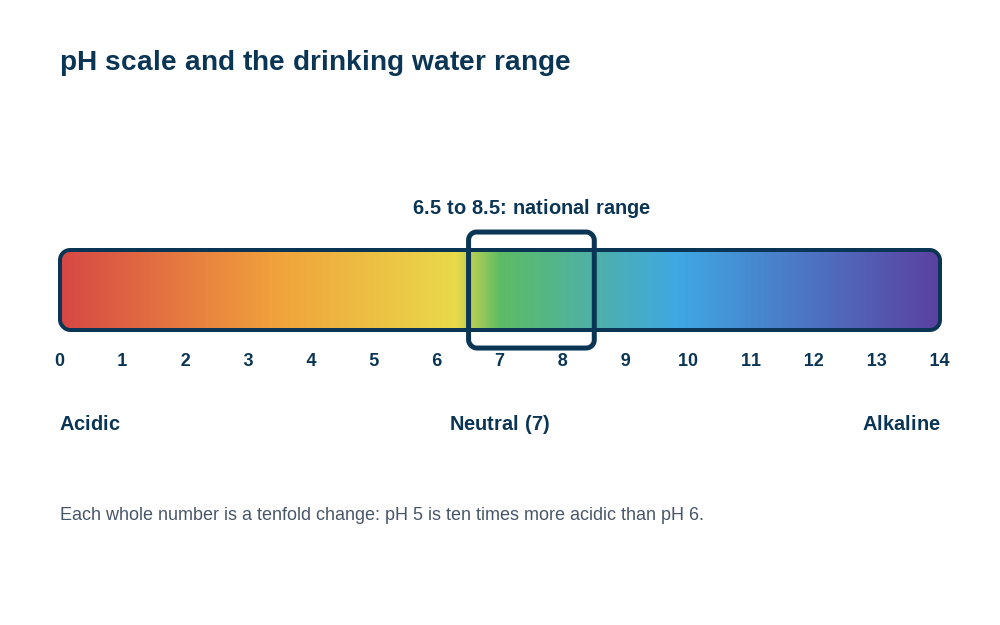
pH runs from 0 to 14. Seven is neutral. Below 7 is acidic, above 7 is alkaline. The scale is logarithmic, so each whole number is a tenfold change: water at pH 5 is ten times more acidic than water at pH 6, and a hundred times more than water at pH 7.
The pH range for drinking water in Pakistan
Pakistan's National Standards for Drinking Water Quality set pH between 6.5 and 8.5. WHO has not set a health-based guideline for pH. It treats pH as an operating figure, because it controls how water behaves in pipes, tanks and treatment plants.
| pH | What you may notice | Usual cause |
|---|---|---|
| Below 6.5 | Blue-green stains on brass and copper fittings, metallic taste, pinhole leaks over time | Very pure water, RO without a mineral stage, some surface water |
| 6.5 to 8.5 | Nothing unusual | Most boring and line water |
| Above 8.5 | Bitter or soda-like taste, slippery feel, scale | High alkalinity, often with hard water |
Low pH matters more than it looks. Acidic water slowly dissolves metal from pipes and fittings, and that metal ends up in the water. In an old house with galvanised or brass plumbing, a low pH can add iron or copper that was never in the source.
Why RO water often reads below 7
An RO membrane removes most dissolved minerals, including the bicarbonate that keeps pH steady. Carbon dioxide, a gas, passes straight through. It forms a weak acid in the water, so the pH drops, often to around 6 to 7.
That is normal and is not the filter adding anything harmful. Most home RO units finish with a mineral cartridge that adds back a little calcium and magnesium, which lifts both the pH and the taste. If your RO water reads low and tastes flat, the mineral cartridge may be used up. It is a routine change during RO servicing.
How to test pH at home
- Test strips. Dip, wait a few seconds and match the colour. Accurate enough to see whether you are inside 6.5 to 8.5.
- Drop kits. A few drops of indicator in a sample tube. A little more precise than strips.
- pH pen. Gives a number to one decimal place, but only if you calibrate it with buffer solution regularly. An uncalibrated pen can be off by a whole point.
Test soon after filling the glass. Water left standing absorbs carbon dioxide from the air and its pH drifts. Our free water test includes pH along with TDS, and the guide to testing water quality at home covers the other checks.
Fixing water that is too acidic or too alkaline
| Problem | Usual fix | Notes |
|---|---|---|
| RO water below 6.5 | Mineral cartridge after the membrane | Change it on schedule, it gets used up |
| Whole supply below 6.5 | Calcite neutralising filter | Raises pH as water flows through. Needs topping up. |
| Above 8.5 with hard water | Treat the hardness and alkalinity, often with RO for drinking | Get a lab report first |
Do not add chemicals to a drinking water tank to change pH unless a proper dosing system is designed for it. Getting the dose wrong is easy and the result can be worse than the problem.
What about alkaline water?
Alkaline water with a pH of 9 or more is sold with a lot of health claims, covered in our alkaline water guide. WHO sets no health-based pH guideline and we do not make health claims for any pH. Water between 6.5 and 8.5 meets the national standard. If you prefer the taste of slightly higher pH, a mineral cartridge on a home RO gets you there without special equipment.
pH is one reading among several. A perfect 7.2 says nothing about germs, arsenic or salt. For those, see safe TDS levels and the guide to arsenic in Punjab groundwater.
Sources
- Pakistan EPA, National Standards for Drinking Water Quality (Ministry of Climate Change copy)
- U.S. Geological Survey, pH and water
- World Health Organization, Guidelines for drinking-water quality
Prices are market ranges, not quotes, and are rechecked every three months. Standards are quoted as published. For a decision about your own water, go by a test of that water.