RO Plants for Home and Business: Sizes and Prices
An RO plant (reverse osmosis plant) removes the dissolved salts that make borewater taste heavy. For a home, it is a compact unit under the kitchen sink.
For a shop, school or factory, it is a plant rated from about 250 to 2,000 litres per hour and above. We size yours from a free water test.
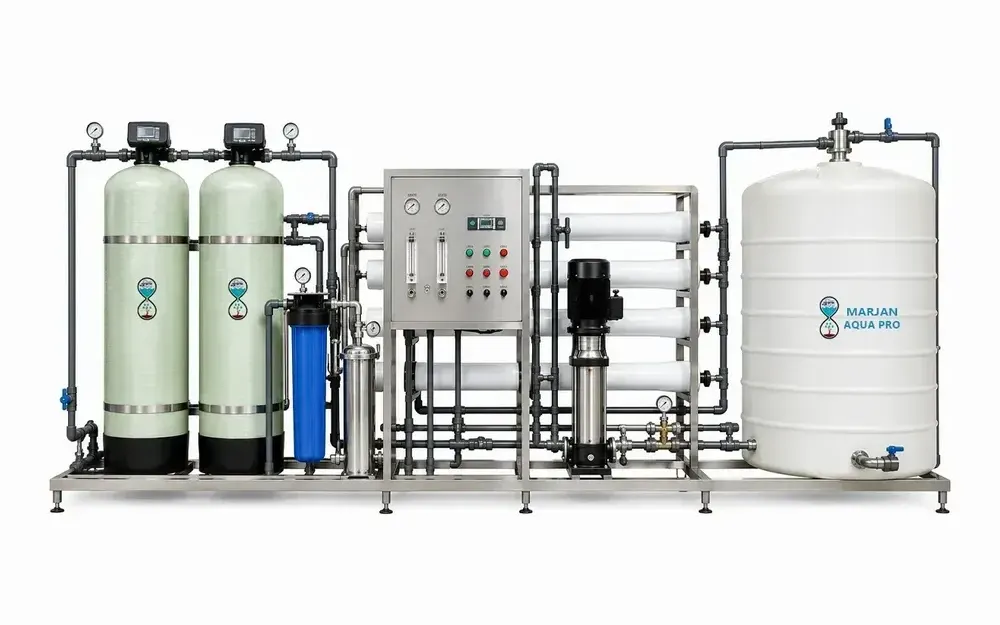
RO plant for home or for business?
RO plant for home
Best for: One household with salty or high TDS water
5 to 9 stages under the kitchen sink, often rated 100 to 150 GPD.
PKR 28,500 to 40,000
Home RO filters and pricesCommercial RO plant
Best for: Shops, schools, water shops and factories
250 to 2,000 LPH and above, with sand, carbon, antiscalant and UV.
from PKR 115,000
See plant sizesRO plant sizes and what they suit
| Size | Litres a day (24 hours) | Litres in 8 hours | Suits | Market price |
|---|---|---|---|---|
| 100 to 250 LPH | about 2,400 to 6,000 | about 800 to 2,000 | Shop, office, clinic | PKR 115,000 to 475,000 |
| 500 LPH | about 12,000 | about 4,000 | School, water shop, restaurant | PKR 490,000 to 650,000 |
| 1,000 LPH | about 24,000 | about 8,000 | Hospital, busy water shop, ice factory | PKR 550,000 to 900,000 |
| 2,000 LPH | about 48,000 | about 16,000 | Community plant, housing society, factory | PKR 960,000 to 1,250,000 |
Poultry and industrial plants are on the RO plant price in Pakistan list.
Sizes people ask about
| What people ask for | What it usually means | Closest size above |
|---|---|---|
| 2000 litre RO plant | 2,000 litres per hour | 2,000 LPH, PKR 960,000 to 1,250,000 |
| 4000 litre RO plant | 4,000 litres per hour, an industrial plant | 3,000 LPH and above, from about PKR 1,200,000 |
| 5000 litre RO plant | 5,000 litres per hour, an industrial plant | 3,000 LPH and above, from about PKR 1,200,000 |
| 5000 gallon RO plant | 5,000 gallons a day, about 790 litres per hour | Between the 500 and 1,000 LPH rows |
| Small RO plant for home | 100 to 150 GPD under the sink | PKR 28,500 to 40,000 |
Sellers use these names loosely. Ask whether a quote means litres per hour, litres per day or the size of a tank.
How to size a commercial plant
Divide the litres you need by the hours the plant can run.
A school that needs 3,000 litres between 8 am and 2 pm needs a plant near 500 LPH, because it has six hours to make that water.
Size it on a 24 hour day and the tank runs dry before lunch. If your area has load shedding and no backup, count only the hours with electricity.
One LPH running for 24 hours is about 6.3 US gallons a day, so a 500 LPH plant is roughly a 3,000 GPD plant.
What is inside the plant?
-
Feed pump
Draws water from the raw water tank into the plant.
-
Sand filter
Traps silt, rust and suspended dirt. It is backwashed to clean itself.
-
Activated carbon filter
Removes chlorine, smell and some chemicals.
Chlorine damages RO membranes, so this stage is protection as much as treatment.
-
Micron cartridges
A last catch for fine particles before the membrane.
-
Antiscalant dosing
Stops hardness from forming scale on the membrane surface.
-
High pressure pump and RO membranes
This is where the salts are actually removed.
-
After the membrane
A UV stage for disinfection and, where you want it, mineral dosing for taste.
Commercial plants use 4 inch or 8 inch membrane elements. Bigger plants simply use more of them.
Where commercial plants are used
Community plants for mosques and housing societies
A community plant runs long hours for people who never see the plant room.
It needs cartridges that are easy to reach, a TDS check at the outlet and a storage tank that gets cleaned.
Water shops
Customers judge a water shop by taste and by the TDS meter on the counter.
The plant has to keep up with the evening rush, so the storage tank matters as much as the LPH rating.
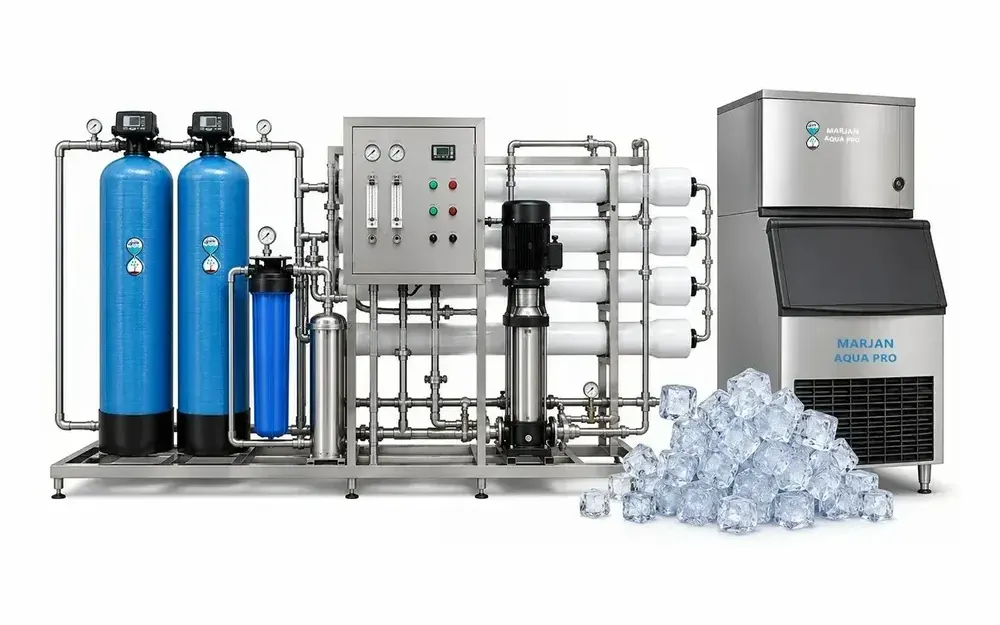
Ice factories
RO water freezes into clearer ice than untreated borewater, because far fewer dissolved solids are left to cloud it.
Poultry farms
Hard, salty borewater scales up nipple drinkers and lines. Sizing, prices and what else a shed needs are on the poultry RO plant page.
Schools, hospitals, offices and restaurants
Drinking water for staff, students, patients and customers. These plants are sized around peak hours, the same way as the school example above.
For factories, see industrial RO plants. For a bottling business, see mineral water plants.
RO plant vs reverse osmosis water filter for home
| Feature | Commercial RO plant | RO water filter for home |
|---|---|---|
| Output | 100 LPH and up | 100 to 150 GPD, about 16 to 24 litres an hour |
| Where it sits | Plant room or roof | Under the kitchen sink |
| Power | Single phase for small plants, usually three phase for larger ones | Normal socket |
| Market price (October 2026) | from PKR 115,000 | PKR 28,500 to 40,000 |
For one household, a reverse osmosis water filter for home is the right size.
What RO will not do
RO sends part of the feed water to the drain as reject, so plan where that water goes. Many owners use it for washing floors or vehicles.
We tell you the expected reject volume for your plant before installation.
RO also removes useful minerals along with the salts, which is why many plants add mineral dosing.
And RO cannot protect water after it leaves the plant. If treated water sits in a tank that has not been cleaned, it picks up germs again.
That is why a UV stage after storage is worth having.
RO plant or water filter plant?
If your water already has acceptable TDS and only needs dirt and germs removed, a water filter plant costs less to run and sends almost nothing to the drain.
Choose RO when the TDS is high or the water tastes salty. The free water test settles it.
Frequently Asked Questions
What is an RO plant?
The plant pushes water through reverse osmosis membranes at high pressure.
It lowers TDS and removes most dissolved salts, hardness and many heavy metals, so borewater or line water is fit to drink or to use in a process.
What does RO stand for?
RO stands for reverse osmosis. Pressure pushes water through a membrane that lets water through and holds back most dissolved salts, which leave with the reject stream.
Which RO plant is best in Pakistan?
The best plant is the one sized to your water test and to the hours you can run it.
When comparing quotes, ask for the capacity in litres per hour, the full stage list, the membrane size and count, and whether antiscalant dosing and UV are included.
Which chemical is used in RO plants?
Antiscalant is dosed before the membranes to stop hardness forming scale.
If chlorine is used to disinfect the raw water, the carbon filter must remove it first, because chlorine damages RO membranes.
Membranes are also cleaned from time to time with cleaning chemicals.
How much water does an RO plant waste?
Part of the feed water always goes to the drain, carrying the removed salts. How much depends on the feed water TDS and the plant design.
Many owners reuse the reject water for washing and cleaning.
Is RO water good for kidneys?
RO water is treated drinking water with most salts and minerals removed. Many home units add a mineral cartridge for taste. We cannot give medical advice.
If you have a kidney condition, ask your doctor which water suits you.
Get a quote on WhatsApp
Send your TDS reading or a photo of your water source and roughly how much water you need each day.
We reply with a recommendation and a price.
General water test free, by TCS from any city. Site visits are free inside Sialkot district. In other cities, the visit charge depends on distance, so ask us first.