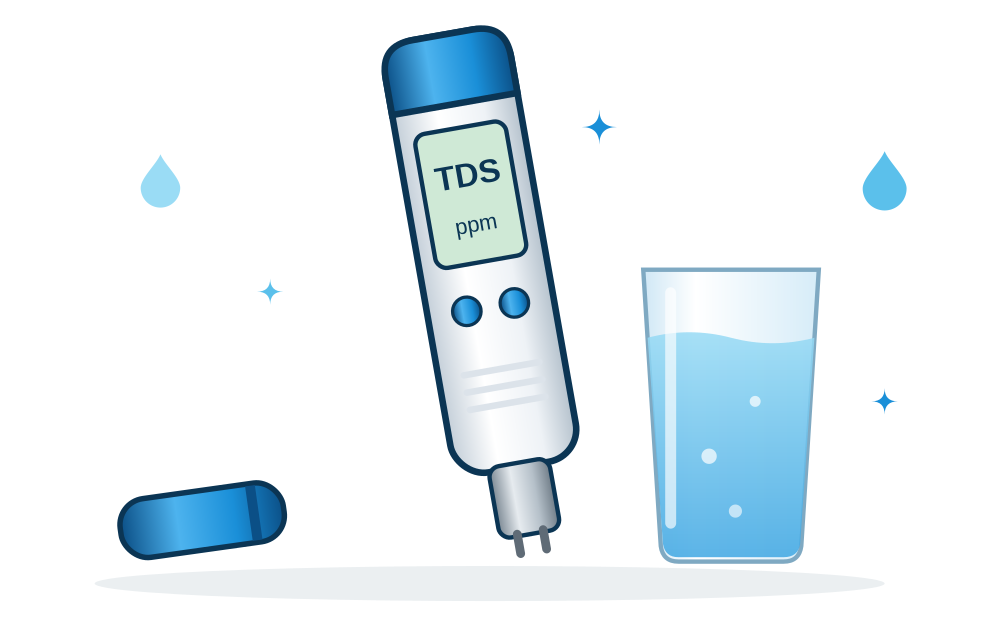
What a TDS meter tells you
The meter passes a tiny current through the water and converts how well it conducts into an estimate of dissolved solids. More salt means a higher number. That one reading answers the most common water question in Pakistan: is this water salty enough to need RO?
What a TDS meter reading means | Reading (ppm) | What it means |
|---|
| Below 300 | Excellent taste rating. No RO needed for taste. |
| 300 to 500 | Good. Within the bottled water limit. |
| 500 to 1,000 | Inside the national limit, but heavier taste. RO is common. |
| Above 1,000 | Above Pakistan's drinking water limit. RO is the usual fix. |
The full chart, and why a good number is not a safety certificate, is in our guide to safe TDS levels in drinking water.
How to use a TDS meter
Use it to check your RO
Test the raw water and the filtered water on the same day. A working membrane takes out most of the dissolved solids, typically well over 90 percent, so 1,000 ppm going in should come out near 100 or below at the membrane. If the filtered reading creeps up month after month, a cartridge or the membrane needs attention. Our RO service team changes both.
What it cannot do
- It cannot detect bacteria. Germs from a dirty tank or a leaking pipe do not change the reading.
- It cannot detect arsenic, nitrate or lead at the levels that matter. Those need a laboratory.
- It cannot tell hardness from other salts.
For anything beyond TDS and pH, see how to test water quality. Prefer not to buy a meter? Our free water test reads TDS and pH at the shop, or by TCS from any city.
Ordering and delivery
Order on WhatsApp or by phone, or pick one up at our shop in Ugoki, open 9 am to 9 pm every day. We deliver across Pakistan with cash on delivery, and confirm any delivery charge before dispatch. See our delivery policy and returns policy.